Vincent van Gogh · 1889
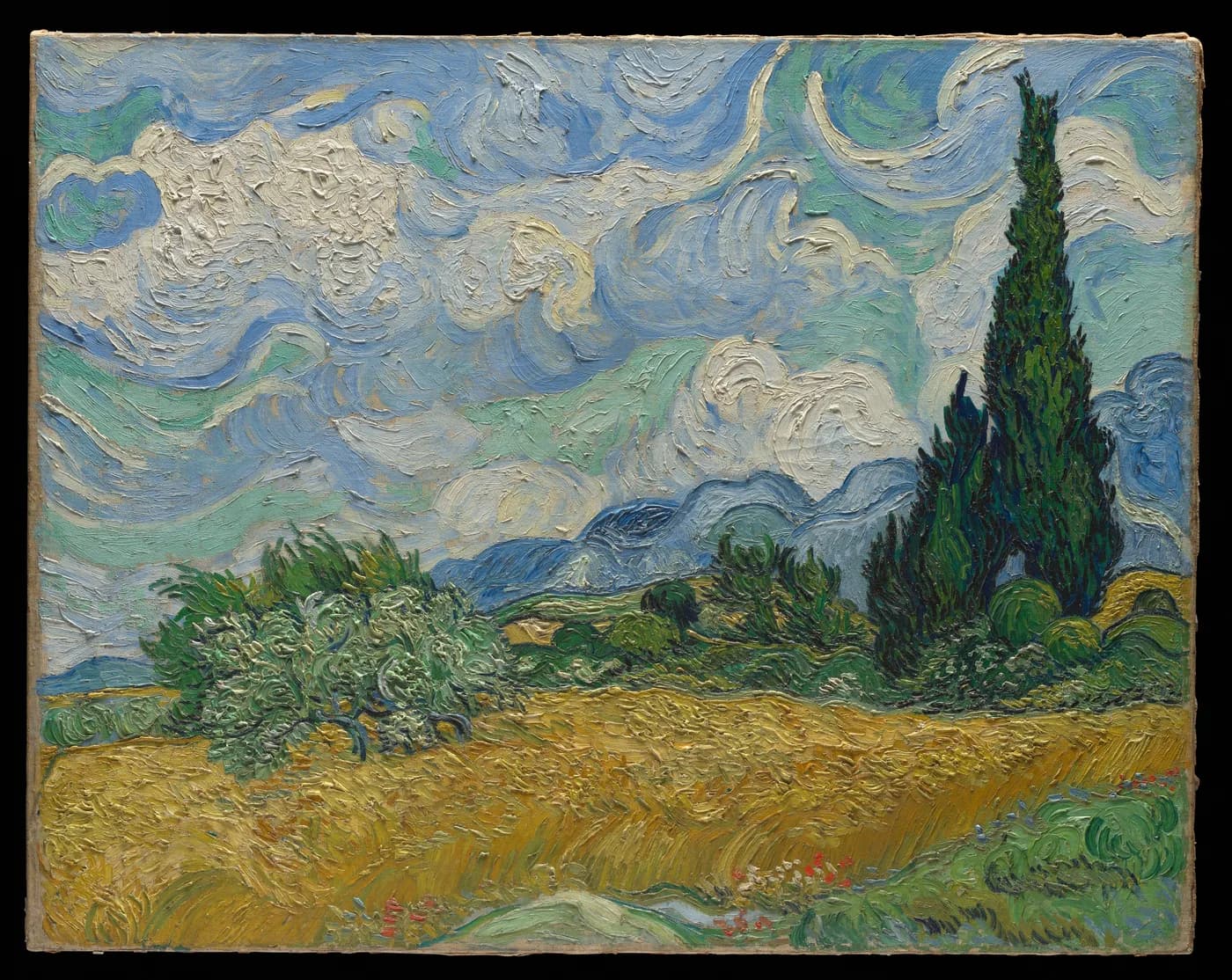
Wheat Field with Cypresses
The only picture here whose surface already had relief.
01Where it came from
Painted at Saint Rémy in 1889, during the year Van Gogh spent at the asylum there. He made more than one version of this view. The Met's is the one he worked up in September, after the first.
The cypress is the dark shape on the right. He described them in letters as beautiful in line and proportion and difficult to get right, which is an unusually calm thing to find in that correspondence.
◆What it is made of
02What the model made of it
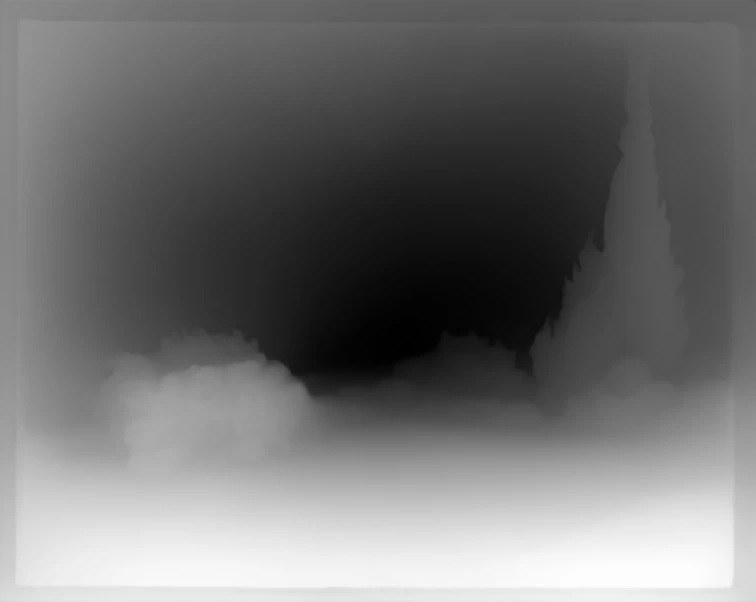
Every other picture here is flat and pretending otherwise. This one is not quite: the paint stands a couple of millimetres off the canvas, and those millimetres are the only real depth in the building. The model cannot tell the difference between a field receding and pigment standing up, and on this canvas it is right by accident.
03Why this one move
This is the one picture here whose surface already has real relief. Van Gogh laid the paint on thick enough to cast its own shadow. Strip the colour and you can see how much of the wind is in the shape rather than the hue.
04Worth looking at
Take the colour away. The wheat keeps moving. Whatever Van Gogh did to make this field feel like weather, he did it with direction rather than with hue.