the making
I wanted to know what a painting looks like from a spot the painter never stood in.
That is the whole project. Everything below is what it took.
One face
A photograph records exactly one viewpoint. So does a painting. You have been looking at these pictures your whole life from the only angle that was ever captured, and it never occurred to you that there was another one, because there was not.
There is now. Not a recovered one. An inferred one. That difference is the entire argument and I have tried not to blur it anywhere on this site.
What a picture gets broken into
Three layers, built once before anyone arrives. Here is a Vermeer going through them.
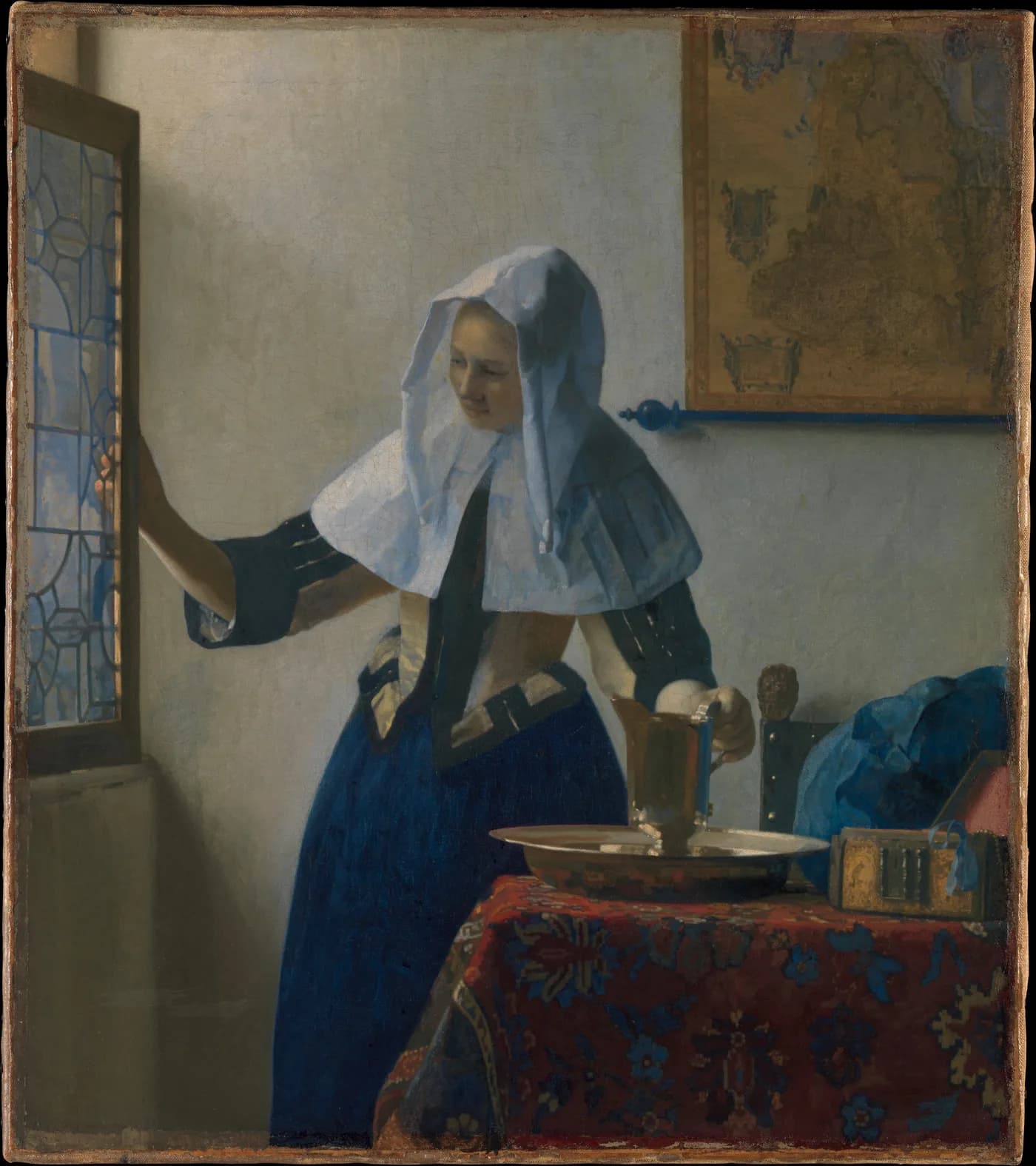
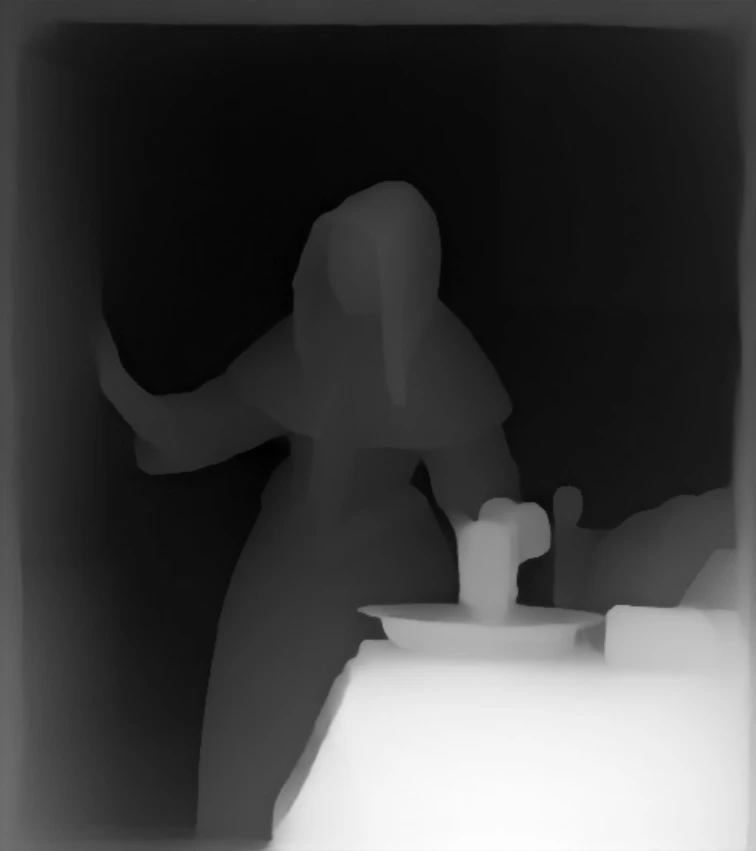
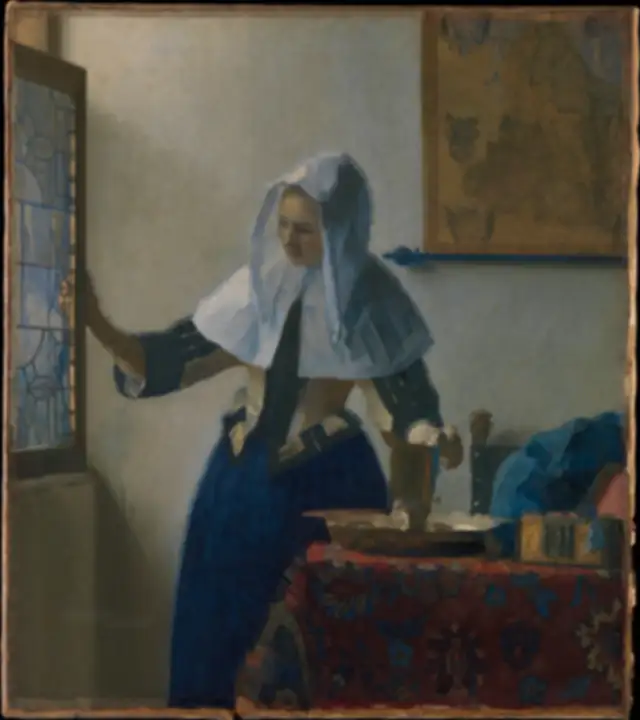
The fourth layer is the one you came from. Go back to the hall and push the relief. What opens up behind the pitcher is that third image, sitting a hair further back than the first.
Things that went wrong, in order
- 01
Every painting came out upside down. The flag that is supposed to flip an image is silently ignored for the kind of image I was loading. Silently. For a week.
- 02
Push a flat surface into relief and everything raised tears away from what is behind it, because there is nothing behind it. Black rips around her arm, through Bruegel’s trees, along Homer’s horizon. Honest. Looked like damage.
- 03
I lit the tears instead of filling them. Better. Still a wall where a room should be. The fix in the end was to reconstruct the background properly, which is the third picture above.
- 04
Three of the four ways of drawing a picture were broken and I did not notice, because the first painting you see uses the fourth one. Check every mode on every piece. I know that now.
- 05
Every word set into a scene came out the same width, so the long ones stretched into banners across the paint. I had been sizing words to a box instead of giving them a height.
- 06
Scrolled too fast and you got a black screen, or the wrong picture. Four files load per painting and they do not come back in the order you asked for them.
- 07
Four goes at timing the fade from one picture to the next, and every one of them was wrong in a new way. In the end I deleted it. A picture belongs to its section and scrolls with it now, so there is no moment to get right.
- 08
Then the relief stopped being the relief. Renaming two textures left the shader asking for names that no longer existed, which is not an error anywhere: it just quietly reads from the first texture instead. For an afternoon the depth you were looking at was the painting’s red channel. It still looked like depth, which is the whole problem.
The part I kept getting wrong on purpose
The first three versions of this were about the technology. They were competent and nobody would ever have cared. I threw them out.
What is actually interesting is not that a model can infer depth. It is what happens to you when a painting you have known since school turns slightly and stops being an image.
Aspect
An aspect is a face of a thing from one position. Change the position and the thing does not change, but what you know about it does.
Vermeer arranged that light for one spot on the floor. Stand somewhere else and you find out how much of the painting was aimed at you and how much of it was just there.
That is worth an afternoon. That is all this is, and I think that is enough.
What it costs
Nothing downloads. The eleven pictures were put through the model once on my laptop, and what ships is a few small images. No model runs when you arrive, on any device, ever.
The one exception is if you bring your own photograph, which loads the model onto your machine after you click and never sends your picture anywhere, because there is nowhere to send it to.
The rest of the boundaries are on limits, written before anybody asked.