Johannes Vermeer · ca. 1662
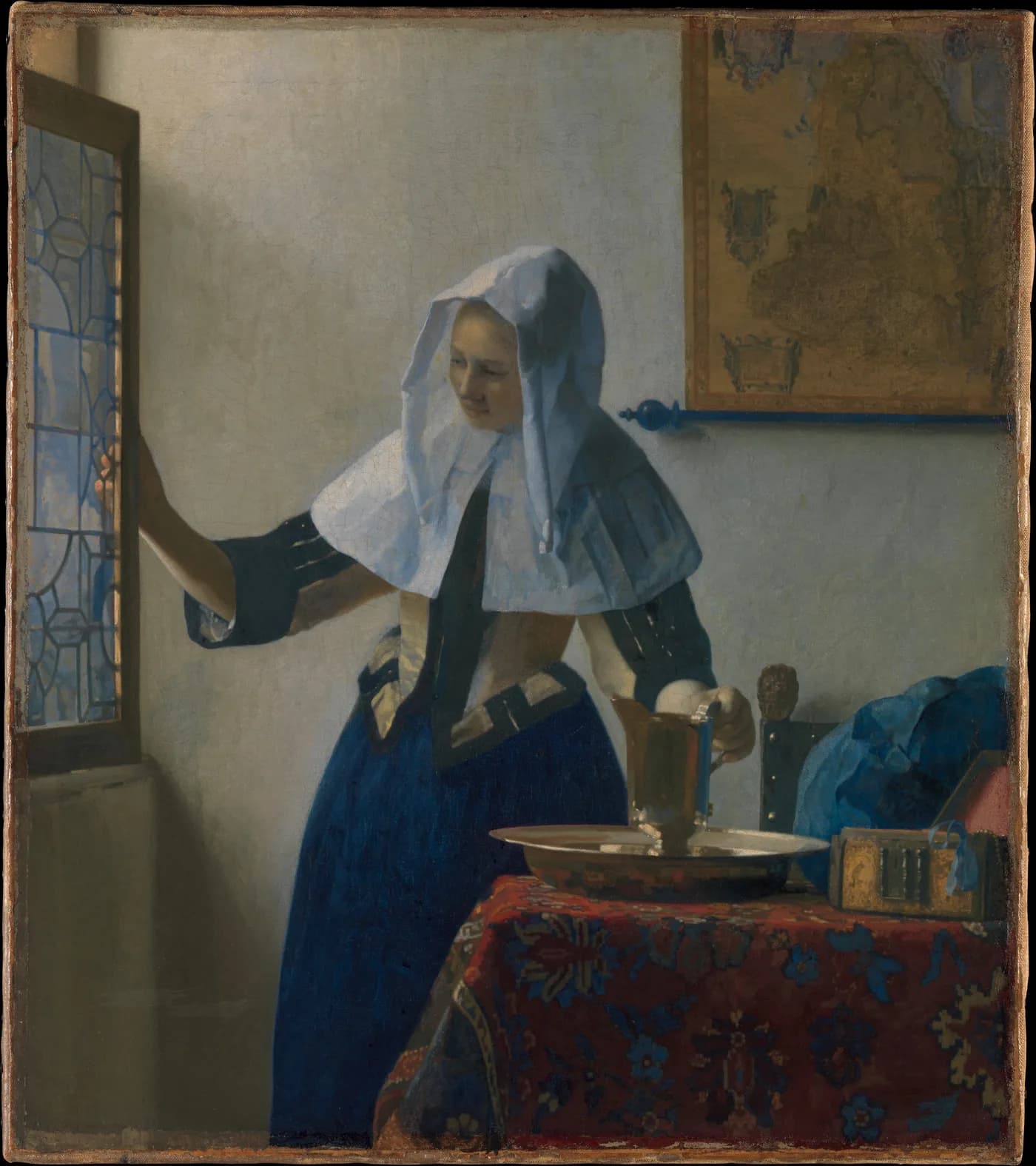
Young Woman with a Water Pitcher
A window, a basin, and about two feet of air that nobody measured.
01Where it came from
Vermeer left around thirty five paintings. This is one of them, made about 1662, and it came to the Met in 1889 as part of Henry Gurdon Marquand's gift. It was among the first of his pictures to reach an American collection, at a time when his name meant very little outside a small circle of dealers.
The subject is barely a subject. A woman opens a window with one hand and holds a pitcher with the other. Everything that makes it worth four centuries of looking is the light.
◆What it is made of
02What the model made of it
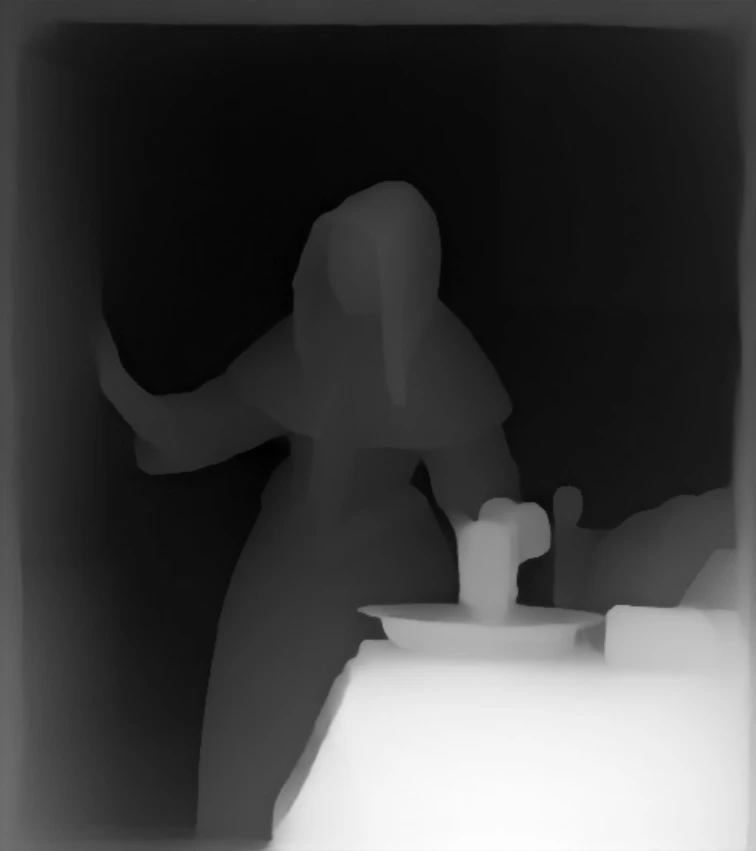
Vermeer built this room out of the same cues the model was trained to read: an edge running away, a body in front of a wall, a frame at a known angle. So the model is not decoding a scene here. It is reading a diagram of one, made by a man who had worked out, without any of the mathematics, exactly which signals convince an eye that space is present.
03Why this one move
Raking light is what a conservator reaches for. It crosses a surface instead of entering it, and it finds the repairs. On a picture that is entirely about light arriving through a window, it is the one move that argues with the painter.
04Worth looking at
Take the light sideways and watch the wall, not her. Vermeer painted that wall with almost nothing on it, and at a raking angle you can see how much work almost nothing is doing.