Albert Bierstadt · 1863
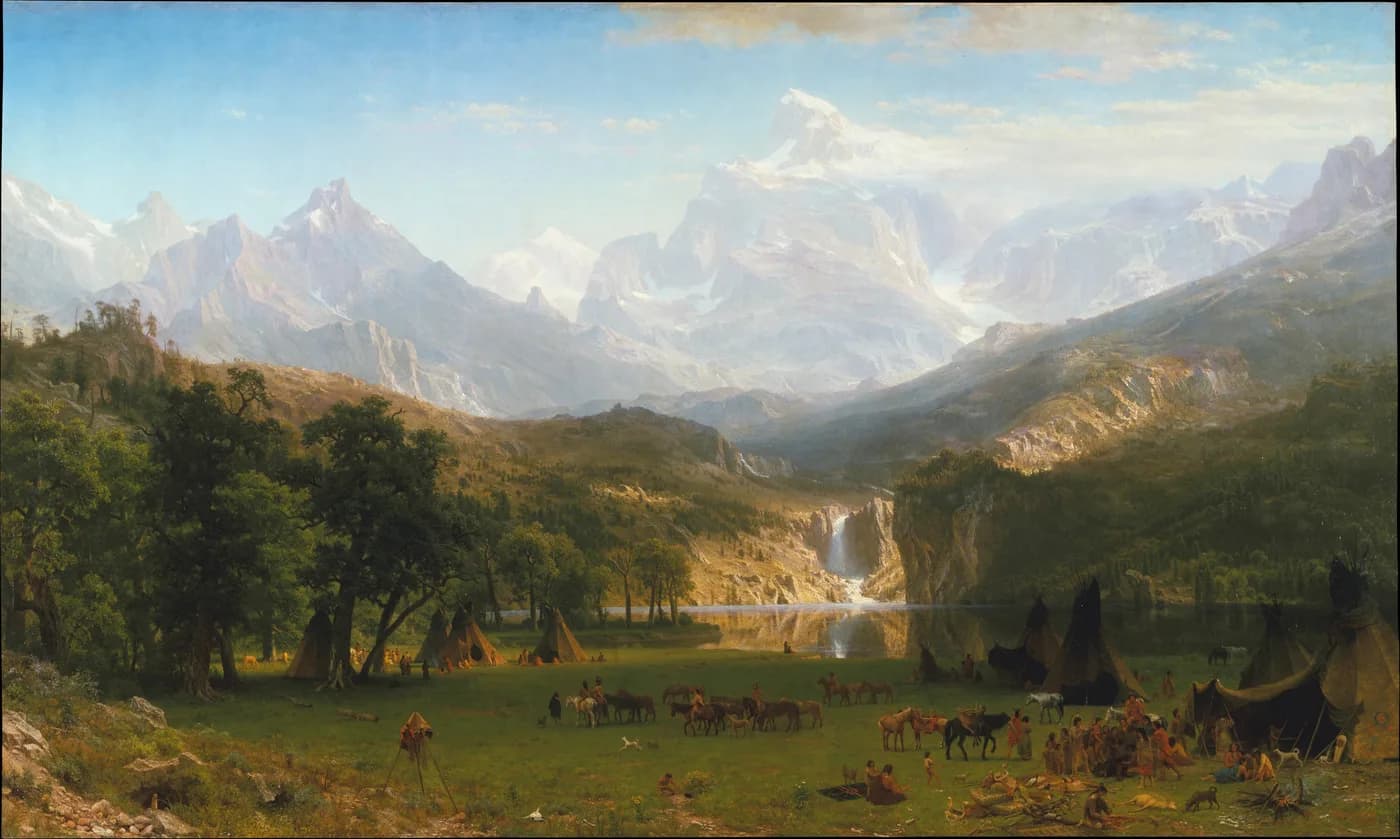
The Rocky Mountains, Lander's Peak
A valley floor that drops away, painted for people who had never seen one.
01Where it came from
Bierstadt travelled west in 1859 with a government survey expedition and came back with studies. He finished this in his New York studio in 1863 and named the peak for Frederick Lander, who had led the party.
It made him rich and it was not exactly true. The mountains are heightened, the light is arranged, and the encampment in the foreground is staged. It is a real place run through a better story.
◆What it is made of
02What the model made of it
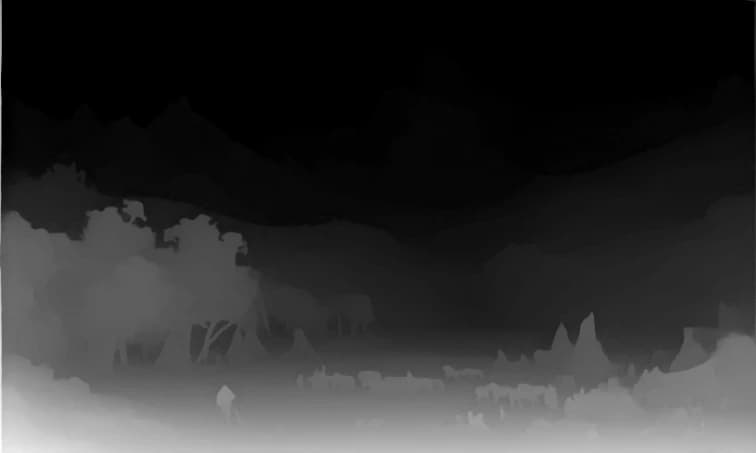
The valley is a composite. Bierstadt moved mountains, raised peaks and staged the camp, and the model reproduces all of it faithfully, because a convincing arrangement of overlap and light is indistinguishable from a real one. You are standing in a place that has never existed, rendered with complete confidence.
03Why this one move
Bierstadt painted the valley floor so that it drops away from you. Go up and it stops being a view and becomes a place with a floor, which is the difference he was selling tickets on.
04Worth looking at
Look down and it comes apart into three flats: camp, lake, mountains. That is not the model failing. That is the painting admitting how it was assembled.