Thomas Cole · 1836
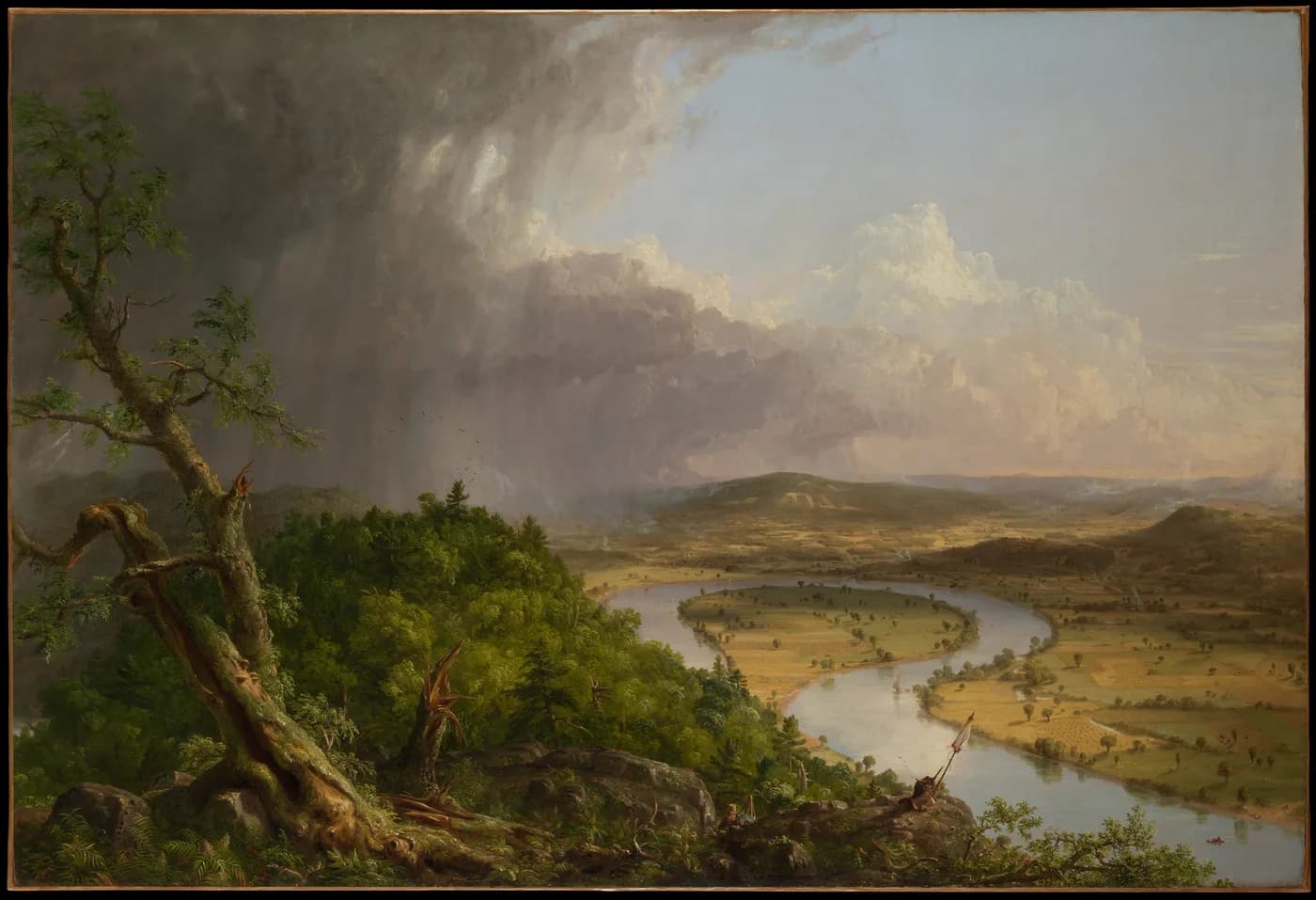
The Oxbow
A storm leaving, seen from the hill it just crossed.
01Where it came from
Cole painted this in 1836 for the annual exhibition at the National Academy of Design. The view is from Mount Holyoke, looking down at the bend in the Connecticut River.
The canvas is split on purpose. Wilderness and dark weather on the left, cleared and farmed valley on the right, and Cole himself down at the bottom in the middle of it with an easel, about the size of a thumbnail.
◆What it is made of
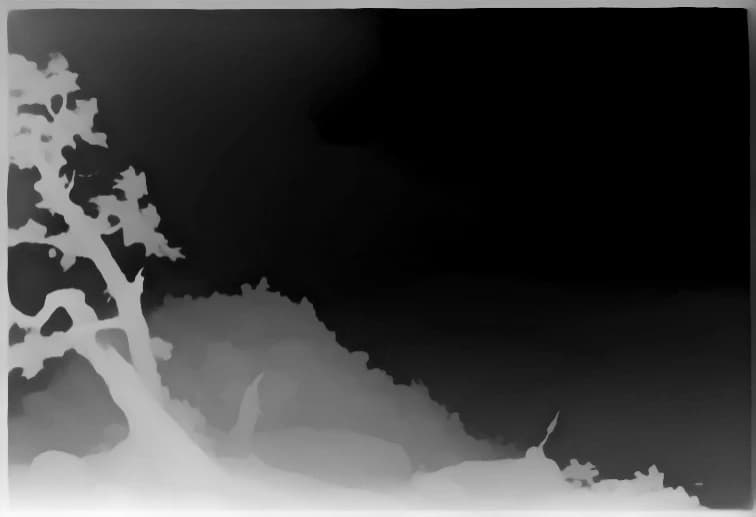
02What the model made of it
Cloud has no surface, so the storm is the one part of this gallery where the model has nothing to measure and answers anyway. What comes back over the left half is not a reading. It is an opinion about how far away rain is.
03Why this one move
Cole split this canvas down the middle: storm and wilderness on one side, cleared farmland on the other. Contour lines do not care which side they are on, and that is the point of running them across it.
04Worth looking at
Run the contours across it. They cross the wilderness and the cleared farmland without noticing the difference, which was the argument Cole spent the whole canvas making and rather hoped you would lose.