Katsushika Hokusai · ca. 1830–32
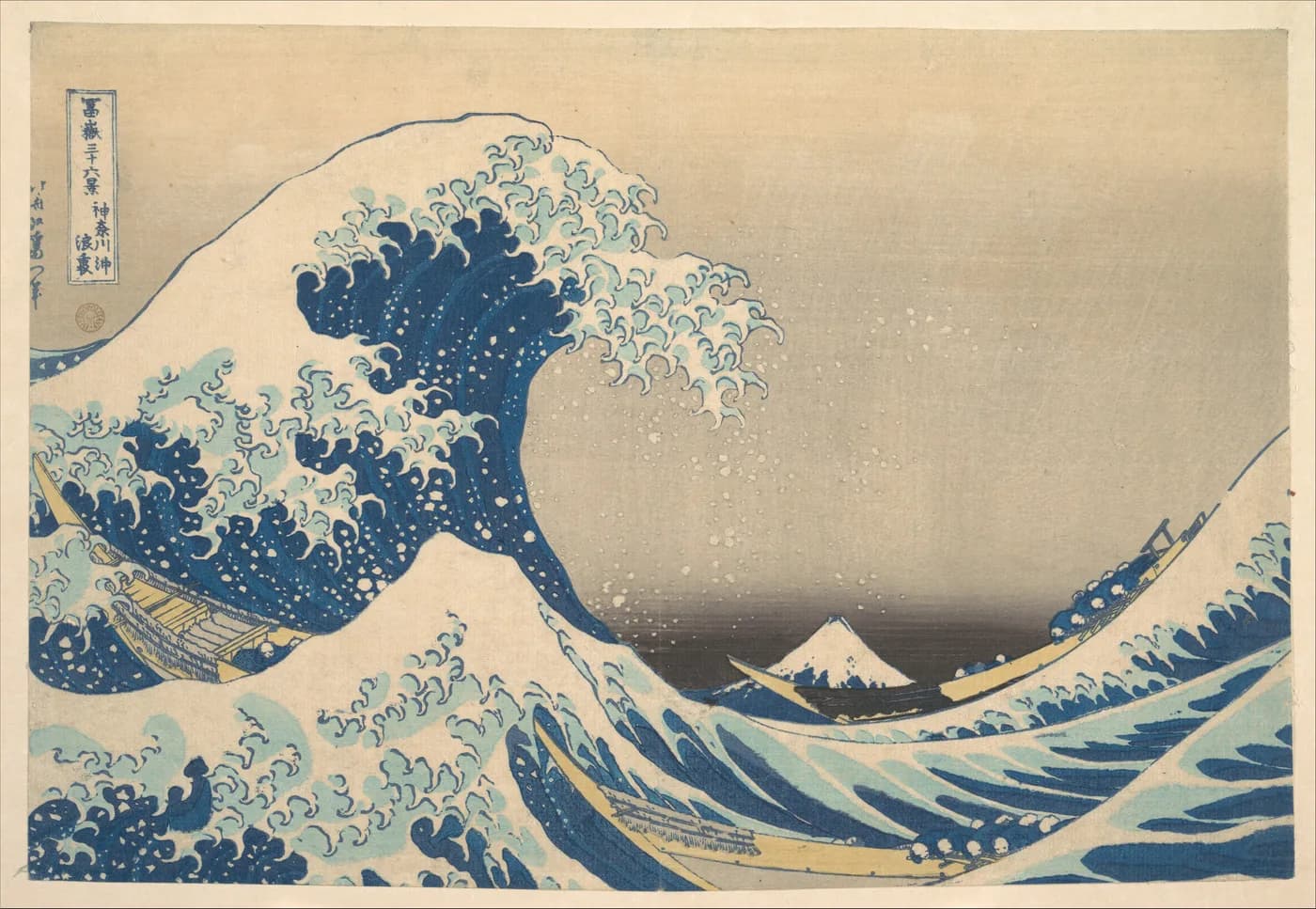
Under the Wave off Kanagawa
A wave drawn as a diagram of a wave.
01Where it came from
A woodblock print from about 1830 to 1832, the first in Hokusai's series of thirty six views of Mount Fuji. It was made in the thousands and good impressions are held by museums all over the world, which is why it is both the most reproduced image in Japanese art and genuinely rare in first-rate condition.
The deep blue is Prussian blue, a pigment newly and cheaply available from Europe at the time, and a lot of the print's force comes from a colour Hokusai had only just been handed.
◆What it is made of
02What the model made of it
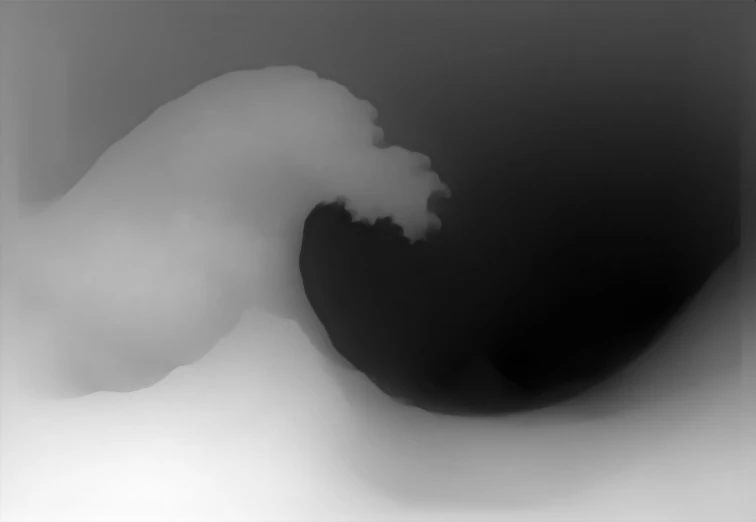
Everything else here is a painting of something. This is a diagram of something: ink on paper, no surface underneath, no light to read. The model is not recovering depth at all, it is inventing depth for a drawing, and the relief you get is fiction resting on a line that was never pretending otherwise.
03Why this one move
This is a print, not a painting. There is no brushwork under it and no surface to find, only a drawing of a wave. So the honest thing to do is take it apart into the samples it was always made of.
04Worth looking at
Fuji sits in the trough, small, exactly as far off as the wave is close. Break it into foam and the mountain is the last thing standing, which is the joke the print has been telling since 1831.